Adaptive remote control interfaces · APPTUI
Adaptive interfaces with no playbook
Product quality supported partnership conversations with Rogers and TV manufacturers including Vizio.
UI Design Team Lead · Led a team of three across visual design, UX, and front end
Context and stakes
APPTUI built remote controls that reconfigured themselves for whatever app or device you connected to.
My role
I led the design team. Our method was a systematic teardown of each host application: map what it exposed, find what was missing, then design a purpose built control surface for it.
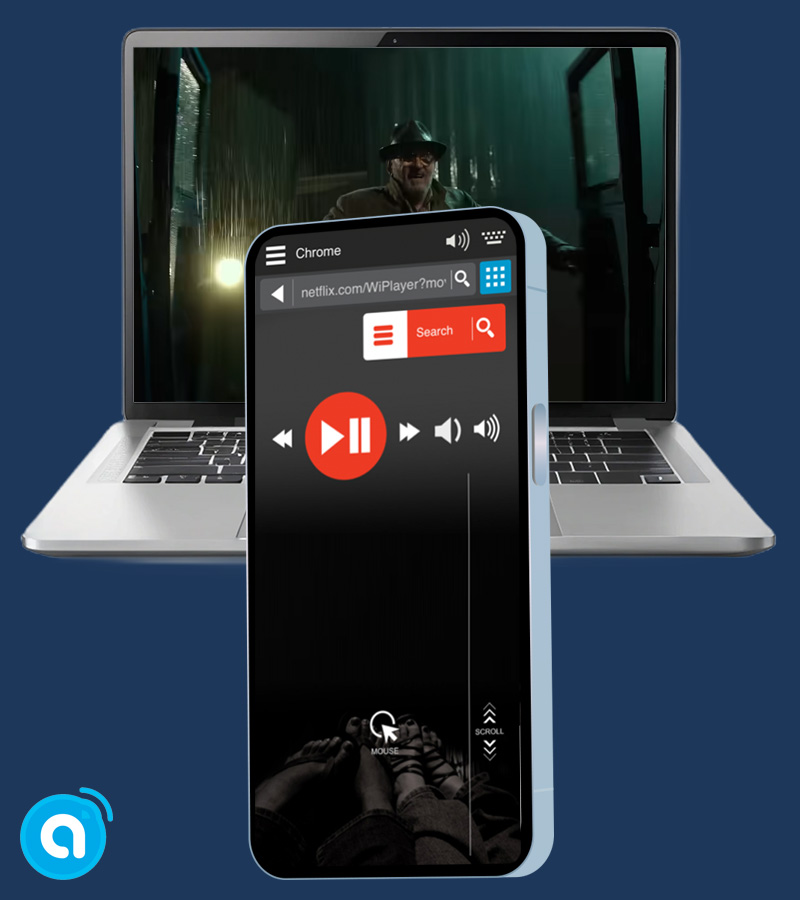
The teardown ran the same way every time, and that was the point. Whatever the host app exposed became the raw material, and whatever it hid became the design problem. A colour palette remote for Photoshop and timeline scrubbing for Netflix were not separate projects so much as the same method pointed at different surfaces.
What I built or changed
I led a team of three across visual design, UX design, and front-end development. We built remotes for YouTube, Vimeo, Netflix, Photoshop, Spotify, Pinterest, and Facebook, each one a purpose-built control surface for what that app could do.
Underneath them sat a set of shared components, so a new remote was assembled from parts that already worked rather than designed from scratch. We built them in code, with early responsive design: everything flexed, so one remote held up across the wide range of phones and screen sizes it had to run on.
We tested in two ways: usability tests with members of the public, and feedback from companies like Rogers and Vizio as we demonstrated the product to them.
We solved the design and the engineering. We never solved distribution.
Outcomes and open threads
Product quality supported partnership conversations with Rogers and TV manufacturers including Vizio, and we built demos for them.
Team
The team of three I led, across visual design, UX design, and front-end development, and the engineers who built the adaptive remotes.