Ontario Health · Health811 · 2022 to present
Research at provincial scale: 1,000 Ontarians and the vendors in between
Findings from more than 1,000 Ontarians informed shipped features, shared design standards, and the Health811 repositioning. Vendor testing was rebuilt to remove facilitation bias.
Context and stakes
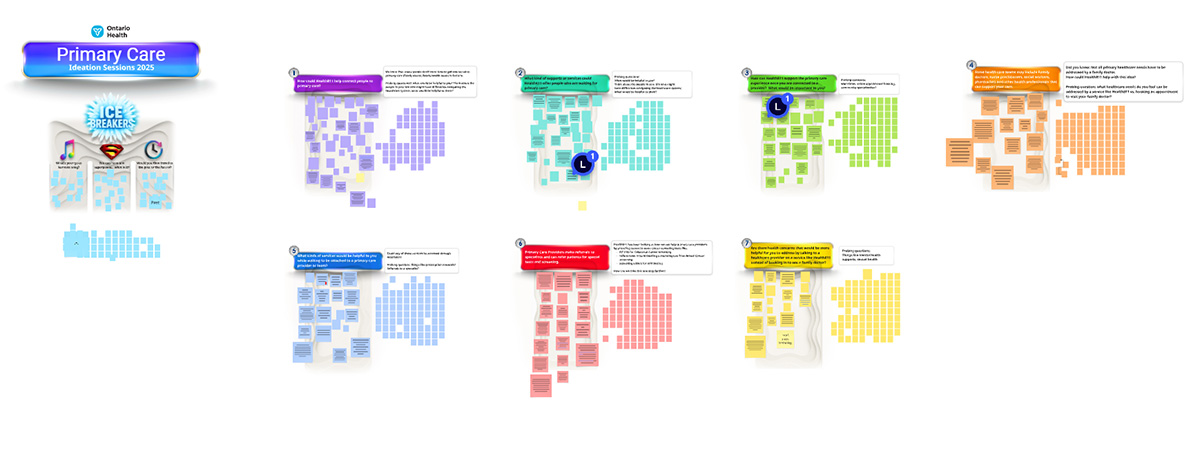
Over several years I led research and co-design sessions with more than 1,000 Ontarians to find what was failing on Health811 and what residents needed next. Participants included Indigenous communities, Francophone residents, seniors, clinicians, youth, and persons with disabilities. The plan was built on collaborative boards and structured group calls.
My role
I owned that program end to end, and I owned a second, quieter problem alongside it: the quality of research run by partner organizations outside my direct control.
The co-design plan stalled twice. The collaborative board did not fit the Francophone group's preference for spoken discussion, making it difficult to capture multiple perspectives efficiently. The technology created a participation barrier for some First Nations participants, while the group format made it difficult for quieter participants to contribute.
The method bent to the people, not the reverse.
What I built or changed
We redesigned the sessions live: parallel breakout groups so multiple voices could speak at once, then everyone reconvened and shared what their group found. The revised format gave quieter participants more opportunity to contribute, and their perspectives were captured more clearly.
The redesign was not a concession on rigour. It was what made rigour possible. One voice at a time had been quietly discarding the input of everyone still waiting to speak, and the Francophone and First Nations sessions were where that showed first. Running groups in parallel and then reconvening meant the capture problem and the participation problem were solved by the same move.
Vendor research quality
When I arrived, partner run usability sessions were structured in ways that invited agreement rather than evidence: product walkthroughs, explanations of how things worked, then asking participants whether everything made sense. I retrained facilitation toward neutral one on one moderation and removed the bias from the practice.
Outcomes and open threads
Findings from the sessions informed shipped features, shared design standards, and the repositioning of Health811 toward a health concern problem solver. Vendor usability testing was rebuilt to remove facilitation bias, with executive sponsorship for direct researcher access to sessions.
The open thread: establishing direct researcher access to sessions as a standard, a change now sponsored at the executive level.